About SafeIce Cleaning
We’re Not a Cleaning Company.
We’re a Compliance Partner for Food Manufacturers.
Food manufacturing doesn’t fail audits because of paperwork.
It fails audits because of what inspectors find in places no one wants to touch.
That’s where we operate.
We help food manufacturers pass FDA and third-party audits by eliminating contamination risk in hard-to-clean, high-risk areas using documented, chemical-free dry ice cleaning processes.
No water.
No chemicals.
No shortcuts.
No surprises during inspections.


150+
15
Trusted by experts
Top rated reviews
Why We Exist
Food safety audits don’t care how clean something looks.
They care about:
Hidden residue
Allergen cross-contact
Biofilm
Dust, grease, and buildup above, behind, and inside equipment
Traditional cleaning methods:
Spread contamination
Introduce moisture
Damage equipment
Leave no defensible documentation
We exist to remove those risks — without shutting down your operation.
What Makes Us Different
We Clean for Auditors — Not Appearance
Every service we perform is designed around:
FDA expectations
Third-party audit criteria
QA documentation requirements
Risk reduction, not cosmetics
Our work stands up to inspection because it’s measured, repeatable, and documented.
Chemical-Free, Moisture-Free Process
We use industrial dry ice blasting to remove contaminants by:
Thermal shock
Kinetic energy
Sublimation (dry ice converts directly to gas)
This means:
No water
No chemicals
No residue
No secondary cleanup
No corrosion risk
It’s safe for sensitive equipment and food environments when performed correctly — and most providers don’t.
Documented, Audit-Ready Results
Every job includes:
Before & after photo documentation
Controlled machine settings
Defined pass/fail criteria
Supervisor verification
Records suitable for audit review
We don’t just clean. We prove it was done correctly.
Who We Work With
We partner with:
Food & beverage manufacturers
Cold storage and freezer facilities
Processing plants with audit exposure
QA-driven operations that can’t afford downtime or findings
If audits matter to you, we belong in your facility.
If price is your only concern, we’re not the right fit.
How We Think About Our Role
We don’t see ourselves as vendors.
We act as an extension of your QA and compliance team, supporting:
Food safety programs
Preventive controls
Sanitation effectiveness
Inspection readiness
Our success is measured by:
Clean audit outcomes
Reduced contamination risk
Zero equipment damage
Long-term partnerships
Our Standard
We operate with one rule:
If it wouldn’t stand up to an FDA inspector, we don’t do it.
That’s the standard we bring to every facility, every time.
Ready to Reduce Audit Risk?
If you’re preparing for an inspection, addressing repeat findings, or upgrading your sanitation strategy, we should talk.
We don’t promise miracles.
We deliver defensible, documented results.
Schedule a Compliance Assessment
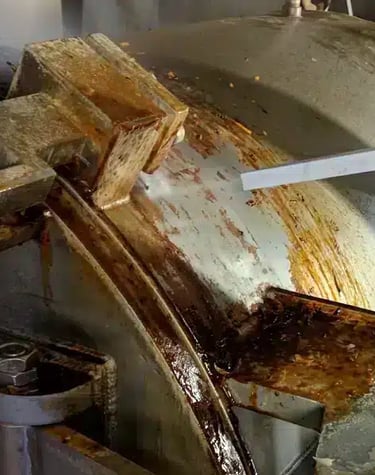
Gallery
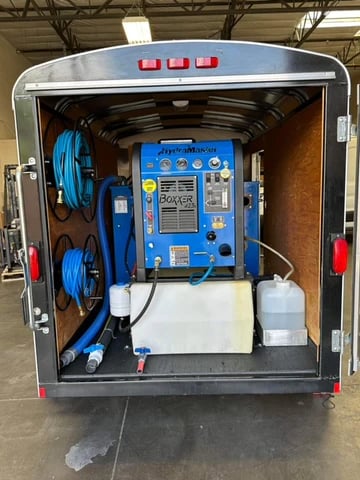
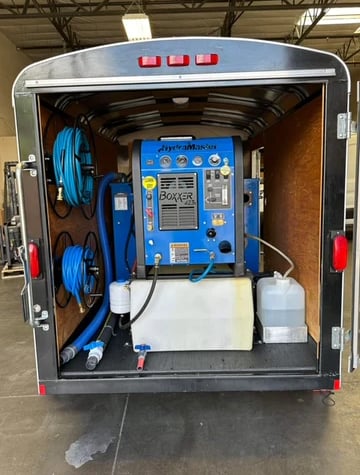
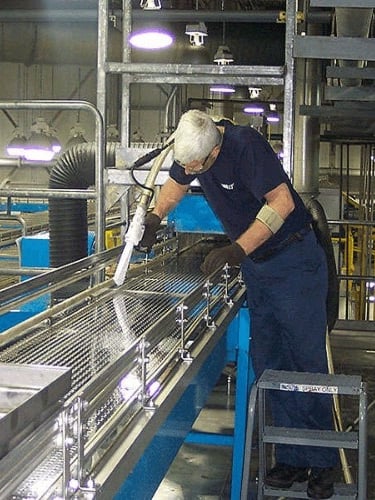
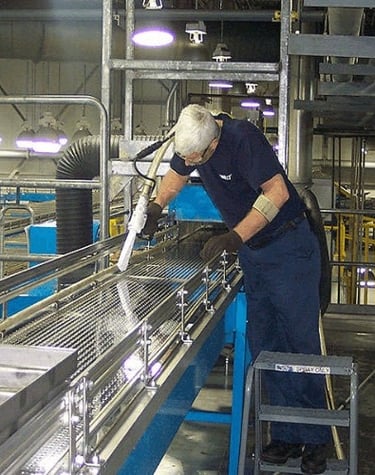
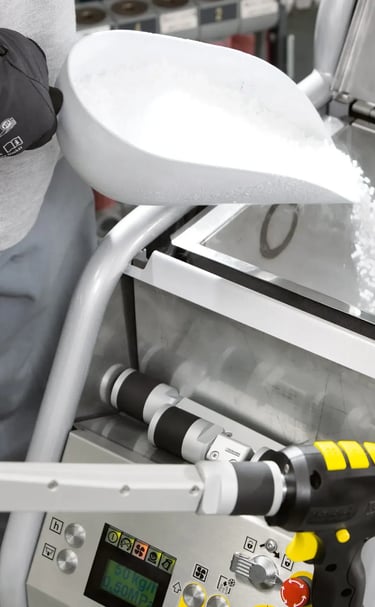
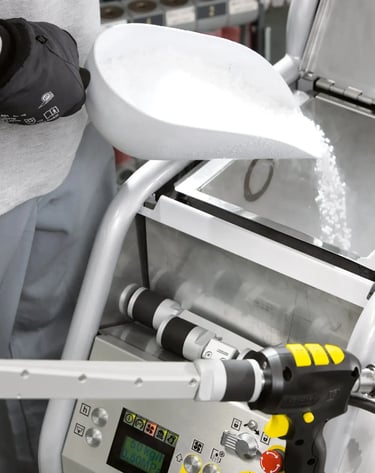
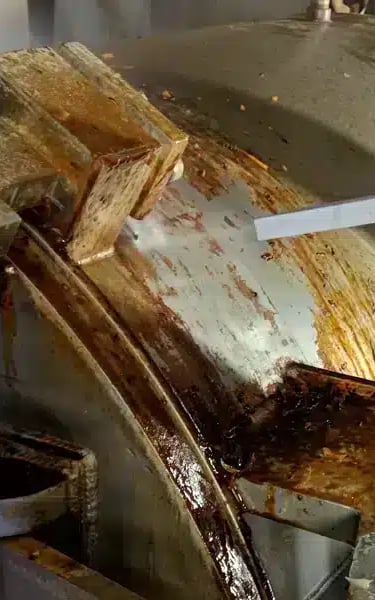
Showcasing our innovative cleaning process.
FAQs
1. Is dry ice cleaning safe for food manufacturing environments?
Yes — when performed correctly.
Our process uses food-grade CO₂ pellets and does not introduce water, chemicals, or residue into the facility. All work is performed under documented procedures designed to align with FDA and third-party audit expectations.
Improper dry ice cleaning can damage equipment or create safety risks. That’s why we operate under controlled settings, trained crews, and strict safety protocols.
2. Will dry ice blasting damage our equipment?
No — when machine settings, nozzle selection, and surface types are properly controlled.
Before any work begins, we identify:
Surface material
Equipment sensitivity
Approved blast parameters
We do not blast bearings, sensors, labels, seals, or exposed wiring unless specifically approved. Every job is performed using predefined settings and pass/fail criteria to prevent damage.
3. Can you clean equipment while we are operational?
In many cases, yes.
Because dry ice cleaning is:
Non-conductive
Moisture-free
Chemical-free
It can often be performed during planned downtime, off-shifts, or targeted production windows. Final determination depends on your equipment, safety requirements, and lockout/tagout protocols.
4. How does this help us pass FDA or third-party audits?
Audits fail when inspectors find contamination in hard-to-reach, high-risk areas — not because of surface-level cleanliness.
Our service focuses on:
Overhead structures
Conveyors
Motor housings
Framework and supports
Equipment exteriors and undersides
Every job includes photo documentation and verification records that support your sanitation and preventive control programs during audits.
5. Do you provide documentation for audits?
Yes. Documentation is a core part of our service.
Each project includes:
Before and after photos
Cleaning scope and locations
Equipment settings
Date, time, and personnel
Supervisor verification
This documentation is designed to be audit-ready, not marketing material.
6. How is dry ice cleaning different from pressure washing or chemical cleaning?
Traditional methods:
Introduce moisture
Spread contamination
Require chemicals
Increase corrosion risk
Often require extended downtime
Dry ice cleaning:
Uses no water or chemicals
Leaves no residue
Requires minimal secondary cleanup
Reduces downtime
Targets contamination without spreading it
It is a precision cleaning method, not a cosmetic one.
7. What types of contaminants can you remove?
Dry ice cleaning is effective against:
Food residue
Grease and oils
Dust and particulate
Sugar buildup
Mold on non-porous surfaces
Allergen residue (validated by client programs)
Final suitability depends on surface type and contamination characteristics.
8. Is dry ice cleaning environmentally friendly?
Yes.
Dry ice pellets are made from reclaimed CO₂. The process:
Uses no chemicals
Produces no secondary waste
Does not add CO₂ to the atmosphere
Eliminates wastewater disposal
It’s one of the cleanest industrial cleaning methods available.
9. How often should dry ice cleaning be performed?
Frequency depends on:
Production volume
Product type
Allergen risk
Audit requirements
Most food manufacturers use dry ice cleaning as:
A quarterly preventive service
Pre-audit preparation
A corrective action after findings
We help clients determine the right frequency based on risk — not guesswork.
10. Is this service more expensive than traditional cleaning?
Dry ice cleaning is not the cheapest option, and it’s not meant to be.
It is designed for:
Risk reduction
Equipment protection
Audit readiness
Reduced downtime
When compared to audit failures, product recalls, or extended shutdowns, it is often the most cost-effective option.
11. Do you replace our sanitation or janitorial team?
No.
We complement existing sanitation programs by addressing areas that traditional methods can’t safely or effectively reach. We work alongside your internal teams, not against them.
12. What industries do you specialize in?
We focus on:
Food & beverage manufacturing
Cold storage and freezer facilities
Processing plants with regulatory exposure
Our systems are built specifically for regulated environments.
13. How do we get started?
We start with a scoped assessment to identify:
High-risk areas
Audit exposure
Equipment sensitivity
Cleaning priorities
From there, we recommend a documented cleaning plan aligned with your operational and compliance needs.
Contact
Get in touch with us
Follow
Connect
info@safeicecleaning.com
(972) 989-8468
© 2026. All rights reserved.